Are Cats Good Emotional Support Animals? What Florida Renters Should Know
When people picture an ESA, they usually picture a dog. But cats are one of the most common — and most effective — emotional support animals, especially for renters in Florida’s apartment and condo-heavy housing market. Here’s what makes cats a strong fit, and what you need to know about qualifying one as your ESA.
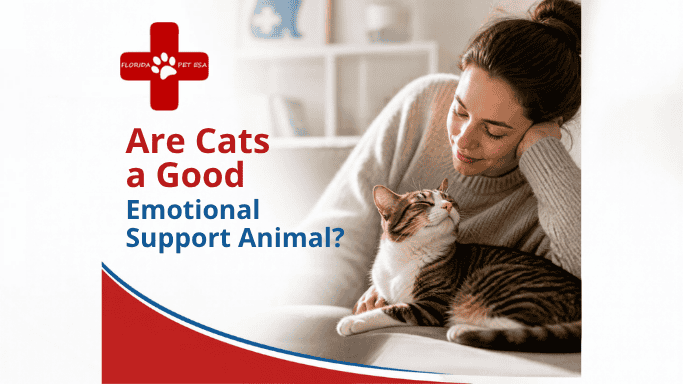
Why Cats Make Great Emotional Support Animals
Lower space and activity requirements. Cats don’t need daily walks or yard access, which makes them a natural fit for apartments, condos, and smaller rental units across cities like Tampa, Orlando, Miami, and St. Petersburg.
Consistent, calming presence. Research on human-animal interaction consistently shows that petting a cat and hearing purring can lower heart rate and reduce cortisol (stress hormone) levels. For people managing anxiety, PTSD, or depression, that low-key physical presence can be genuinely regulating.
Routine and responsibility. Feeding, litter maintenance, and daily care provide light structure — something that’s often therapeutically valuable for people navigating depression or anxiety, without the higher physical demands of dog ownership.
Fewer building restrictions. Many Florida rental buildings that restrict dog breeds or weight are more permissive with cats by default — though as an ESA, your cat isn’t subject to those pet restrictions anyway once you have a valid letter.
Do Cats Qualify as ESAs Under the Law?
Yes. The Fair Housing Act doesn’t limit ESA status to dogs. Any animal that provides therapeutic support connected to a diagnosed mental or emotional condition can qualify, as long as:
- You’ve been evaluated by a licensed mental health professional who determines the animal provides a related therapeutic benefit
- The animal is manageable in a residential setting
- The animal doesn’t pose a direct threat to other residents or cause undue property damage
Cats check all three boxes easily in the overwhelming majority of cases, which is part of why they’re one of the most commonly approved ESAs after dogs.
What Your ESA Letter Needs to Say About Your Cat
Your letter doesn’t need to describe your cat’s personality or training — ESAs, unlike service animals, aren’t required to have specialized task training. What matters is that the letter:
- Confirms you have a diagnosed mental or emotional condition
- States that an emotional support animal is part of your treatment plan
- Comes from a Florida-licensed mental health professional on official letterhead, including their license number and issue date
Common Questions From Cat Owners
Can I have more than one ESA cat? Yes — Florida Pet ESA offers a discount for two-pet households, and you only need to complete the questionnaire once to cover both animals, provided your LMHC can identify the specific therapeutic benefit each one provides.
Do landlords treat cat ESAs differently than dog ESAs? They shouldn’t. Once you have a valid letter, the same Fair Housing Act protections apply regardless of species — no pet deposits, no breed or weight restrictions, and no denial based on “no pets” policies (with the same narrow exceptions that apply to any ESA).
Does my cat need any special certification or registration? No. There is no official ESA registry for any species. The only thing that legally matters is a legitimate letter from a licensed mental health professional.
Getting Your Cat Qualified as an ESA in Florida
If your cat already plays that steadying role in your life, the next step is a real evaluation — not an online quiz or instant certificate. Florida Pet ESA connects Florida residents with a licensed mental health counselor for a genuine assessment and a compliant ESA letter that protects your housing rights statewide.